
Essential Driving Tips for NZ Roads
1. Drive on the Left
New Zealand drives on the left side of the road. If you're from a right-hand traffic country, this takes practice. At one-lane bridges or when exiting narrow spots, it's easy to momentarily forget - so stay vigilant.
2. Understand Your Motorhome's Size
Motorhomes are bigger, heavier, and higher than cars. This affects:
- Turning radius: Take corners wider and slower
- Braking distance: Leave extra gap between you and the vehicle ahead
- Height clearance: Watch for low bridges, overhanging branches, and tree canopies
- Rear visibility: Use large mirrors and reversing cameras; ask someone to guide you when reversing
3. Speed Limits
- Follow posted speed limits (typically 100 km/h on open highways)
- If towing a trailer, motorhomes are restricted to 90 km/h maximum, even in 100 km/h zones
- Slow down for corners, gravel roads, and wet conditions
Handling Steep Hills
New Zealand's terrain is mountainous, and steep descents are common - especially in the South Island.
Going Downhill:
- Use a low gear (manual) or steep hill assist (automatic) to control speed
- Avoid riding the brakes—this can cause overheating and brake fade
- Pick up too much speed is dangerous—keep speed controlled and steady
Going Uphill:
- Motorhomes accelerate slower; be patient and maintain momentum
- Use slow vehicle bays when traffic builds up behind you - pull over safely and let faster traffic pass
On Narrow Hills:
- Downhill traffic should give way to uphill traffic on narrow single-lane sections
- Downhill vehicles have better control and more places to pull over
Navigating Narrow Roads
Many NZ roads, especially in rural and scenic areas, are narrow with limited shoulder space.
Tips:
- Slow down for corners—take them gently, especially in larger 3–4 berth motorhomes
- Scan ahead for livestock, forestry vehicles, and oncoming traffic
- Travel at a speed where you can stop within the visible road ahead
- Pull over in safe spots when traffic builds up behind you
- On gravel roads: increase following distance, avoid sudden braking, and steer smoothly
- Keep left to minimize stone chip damage from other vehicles
One-Lane Bridges: Rules and Safety
New Zealand has over 3,000 one-lane bridges, mostly on rural roads but also on busy routes like SH25 (Thames-Coromandel).
How to Approach:
- Slow down and be prepared to stop
- Check the signs:
- Yellow diamond: warning of one-lane bridge ahead
- Round red-bordered sign: give way to oncoming traffic
- Blue sign with white arrow: you have right of way
- Only proceed if the bridge is clear of oncoming traffic
- Wait at the white line after the triangle if you must give way
- Exit into the left lane—easy to forget after crossing
- Watch reflective markers on parapets - bridges are narrower than the road
Special Care for Motorhomes:
Wider vehicles like campervans need extra caution at one-lane bridges.
Livestock on the Road and Passing Horses
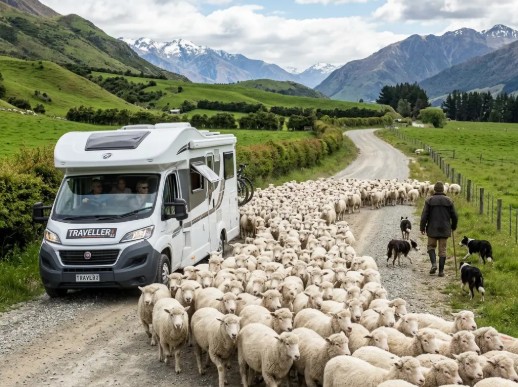
New Zealand is a farming country, and encountering livestock on or near roads is common - especially in rural areas like the Central North Island, Canterbury, Otago, and the High Country.
Cattle and Sheep on the Road
- Slow down immediately and stop if animals are on the roadway
- Never honk aggressively - this can startle animals and cause them to bolt or run into traffic
- Wait patiently for the farmer or shepherd to guide them off the road
- If no stock person is present, wait until animals have cleared the road completely
- Give animals plenty of space when they're on the roadside - they may move unpredictably
Passing Horses
Horses are particularly sensitive and can be spooked by large vehicles like motorhomes:
|
Do's |
Don'ts |
|
Slow to 20–30 km/h when passing horses |
Don't honk or make loud noises |
|
Give at least 2 meters (6 feet) of space |
Don't speed up or rev your engine |
|
Pass slowly and steadily |
Don't make sudden movements |
|
Watch for horse rider hand signals |
Don't pass if the rider seems unsure |
|
If unsure, stop and wait for the rider to move wider |
Don't rush—it can take time for horses to settle |
- Riders may move to the center of the road to avoid hazards on the side—give them space
- Watch for horse signs on rural roads indicating frequent horse traffic
- If you see a horse and rider approaching, slow down early and be prepared to stop
Farm Vehicles and Shearing Trucks
- Large farm vehicles, shearing trucks, and livestock trailers travel slowly on rural roads
- Be patient and wait for safe passing opportunities
- Watch for "farm crossover" signs indicating vehicles may enter/exit the road
- Farmers may stop suddenly to check stock gates or tend to animals
Why This Matters
- A startled horse or animal can cause serious accidents
- Motorhomes are large and may appear intimidating to livestock
- Rural roads often have no shoulder, leaving animals nowhere to go
- Collision with livestock can damage your motorhome and injure animals
Motorhome Driver Etiquette: Being a Considerate Road User
Driving a motorhome comes with extra responsibility. You're operating a larger, slower vehicle that affects other drivers around you. Good etiquette makes roads safer and more pleasant for everyone.
Pull Over at Slow Vehicle Bays
- New Zealand highways have slow vehicle bays (pull-over spots) every few kilometres on hilly sections
- If you see 5 or more vehicles behind you, pull over at the next bay and let them pass
- This is especially important on winding roads where faster cars can't overtake safely
- Don't wait until you're holding up a long line - be proactive and courteous
Use Your Indicators Early
- Motorhomes need more time and space to manoeuvre
- Signal well before turns, exits, or pull-overs so drivers behind you know your intentions
- Indicate early when slowing down for corners or wildlife
Leave Plenty of Space When Passing
- When overtaking cyclists, horse riders, or pedestrians, give them at least 1.5 meters of clearance
- On narrow roads, wait for a clear, straight section before passing
- Don't squeeze past on tight corners or blind spots
Be Patient at Overtaking Opportunities
- If you're being passed by another vehicle, maintain your speed (don't speed up)
- Move slightly left to give them more room if safe
- Don't race vehicles trying to overtake you
Respect Rest Areas and Campsites
- Don't park motorhomes in regular car parking spots at day-use areas unless clearly permitted
- Use designated motorhome parking or freedom camping spots where allowed
- Keep noise down at campsites, especially after 10 PM and before 7 AM
Watch Your Mirrors Constantly
- Check mirrors frequently to see if traffic is building behind you
- Be aware of your vehicle's width and height when passing through narrow gaps
- If someone is waving you through a tight spot, thank them with a wave or nod
Yield to Emergency and Farm Vehicles
- Pull over safely for emergency vehicles with flashing lights
- Give farm vehicles plenty of room - they may need to swing wide to turn
- Don't tailgate slow-moving agricultural vehicles; wait for safe passing zones
Keep Left Unless Passing
- On multi-lane highways, stay in the left lane unless overtaking
- This is standard road etiquette and law in New Zealand
- It keeps traffic flowing smoothly and reduces dangerous overtaking
Wave and Say Thanks
- Kiwis are known for their friendly "car wave" - a quick hand raise when someone lets you in or pulls over
- A simple wave acknowledges kindness and builds good road culture
- It's especially common in rural areas where travellers support each other
Don't Block Access Points
- When stopped at viewpoints, don't block driveway entrances, farm crossovers, or emergency access
- Pull completely off the road when stopping for photos
- Use designated pull-out areas whenever possible
Remember: Being a considerate motorhome driver means you'll have more friendly interactions, fewer road rage incidents, and a better reputation for the motorhome community. Kiwis appreciate travellers who respect their roads and local customs.
Additional Safety Tips
Fatigue Management
- Tiredness is a major accident risk, especially after long-haul flights
- Take breaks: a coffee + 20-minute nap at a rest area can save lives
Secure Your Belongings
- Lock cupboards, drawers, and the fridge before driving
- Secure table extensions, drop-down beds, and garage doors
- Loose items can become dangerous projectiles
Weather Preparedness
- NZ has "four seasons in one day" - check conditions before leaving
- Slow down on wet roads and increase following distance
- Carry snow chains in winter if traveling in the South Island - you may need them on certain roads
Everyone Must Be Seated
- When the van is moving, it's a vehicle - everyone must be strapped in with seatbelts
- Moving freely can lead to injury during unexpected stops
Final Thoughts
Driving a motorhome in New Zealand is an adventure that rewards preparation and caution. By understanding how to handle steep hills, narrow roads, one-lane bridges, and livestock encounters—and by respecting your vehicle's size and limits—you'll enjoy a safe and unforgettable journey through Aotearoa's breathtaking landscapes.
Drive carefully, take your time, and leave ordinary behind.